Anyone can move a couch. Packing fragile items — wine glasses, framed art, a flat-screen, your grandmother’s china — is the part that separates a clean Santa Barbara move from a heartbreaking one. Tight stairwells in The Mesa, hillside driveways in Montecito, narrow streets in downtown SB and Carpinteria all add jostle to every box on the truck.
At Black Horse Delivery, our packers have handled fragile-heavy moves across Ventura and Santa Barbara County for 18+ years — from one-bedroom Goleta apartments to art-filled homes in Hope Ranch. Below is the exact system we use, so you can pack like a pro even if you do it yourself.
Start with the right materials — not what’s in your garage
Most broken items aren’t broken by movers. They’re broken inside the box, by the wrong materials. Before you wrap a single piece, gather these:
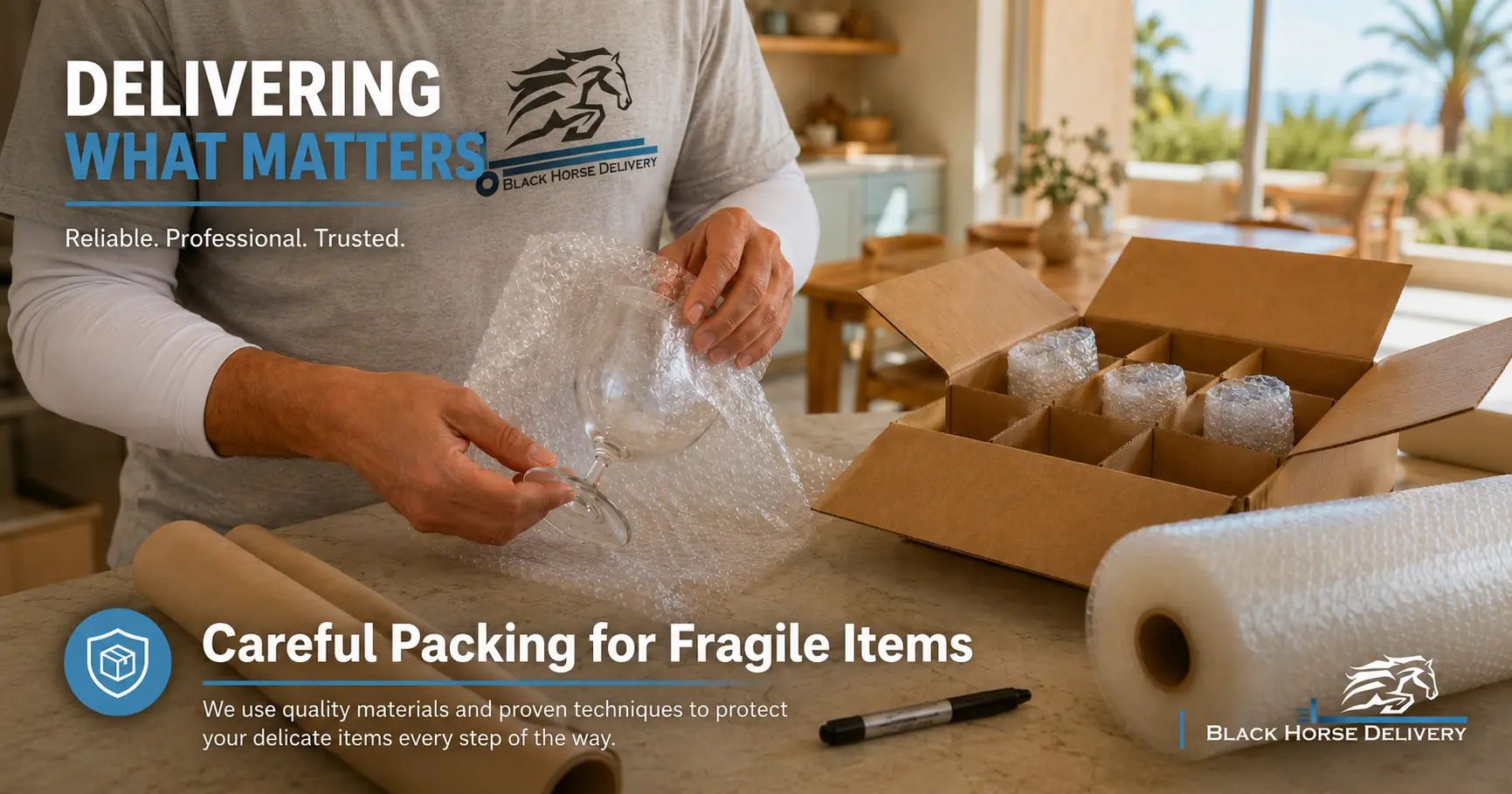
- Dish-pack boxes with cell dividers (thicker walls than standard boxes — designed for fragile loads)
- Mirror cartons (telescoping flat boxes for art, mirrors, and TVs)
- Clean packing paper — never newspaper. Newsprint ink transfers permanently to china and crystal.
- Bubble wrap in two sizes: small bubble for direct contact, large bubble for outer cushioning
- Foam corner protectors for frames and furniture corners
- Painter’s tape (gentle on finishes) and packing tape (for box seams)
- Permanent markers and “FRAGILE / THIS SIDE UP” labels
A full kit for a 2-bedroom Santa Barbara home runs about $120–180 in supplies — and we can drop a boxes and supplies kit at your door anywhere from Carpinteria to Camarillo.
The pro method: wrap, then box, then cushion
Every fragile item follows the same three-step rule, no matter what it is:
- Wrap each piece individually so no two fragile surfaces ever touch.
- Choose a box only slightly larger than the contents — empty space is what causes movement, and movement is what causes breaks.
- Cushion every gap with crumpled paper or bubble wrap until you can shake the box gently and hear nothing shift.
When you finish a box, lift it. If anything rattles, open it back up and add more padding. Pro packers say it like a mantra: if you can hear it, you can break it.
Glassware, dishes, and stemware
This is the category that gets damaged most often in DIY moves, and almost never in pro ones — because the technique is so specific:
- Plates and bowls: stand them on edge like records, never stacked flat. Stacked plates concentrate weight on the bottom one and crack under a single hard turn on Highway 101.
- Wine glasses and stemware: stuff the bowl with crumpled paper first, then wrap the entire glass in paper, then bubble wrap. Place stem-up in a dish-pack cell divider.
- Mugs: wrap individually, then nest two-by-two in paper-lined cells with the handles pointing opposite directions.
- Heavy serving pieces (casseroles, marble, cast iron): these go in their own small box on the bottom of the load — never in the same box as delicate items.
Mark the top of every fragile box with arrows pointing up and the word FRAGILE on at least two sides. Loaders read the tops of stacks first.
Electronics and large screens
The biggest mistake we see is wrapping a TV directly in plain bubble wrap. Plain bubble wrap can carry a static charge that damages LCD and OLED panels — use anti-static bubble wrap for any screen.
Our checklist for electronics:
- Photograph the cable layout on the back before unplugging anything (saves an hour at the new place)
- Bag and label cables, then tape the bag to the device — not loose in a “cables” box you’ll never find
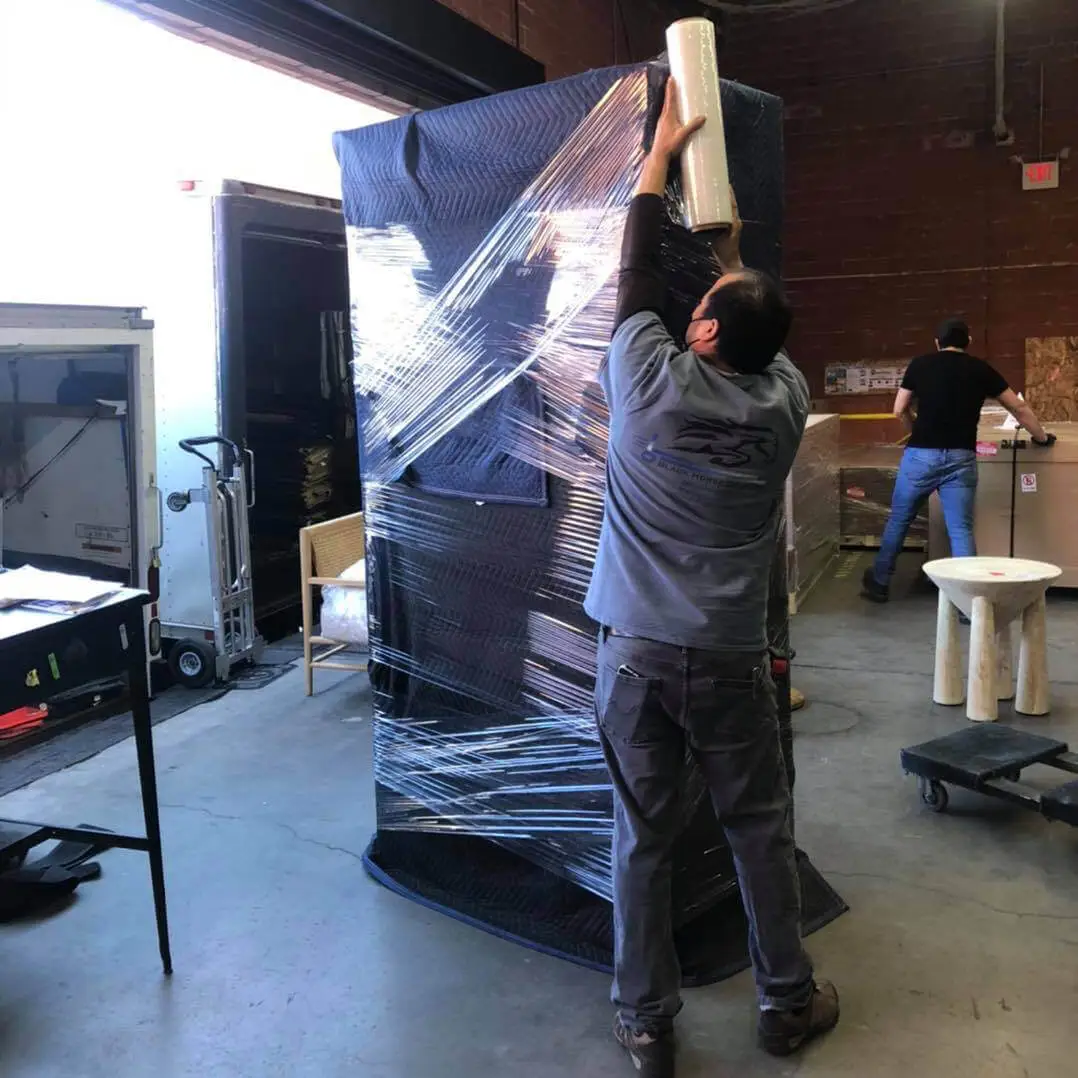
- Wrap screens face-first in a soft moving blanket, then anti-static bubble wrap, then a flat-screen TV box or custom carton
- Transport upright, never flat — internal panels can sag under their own weight if laid horizontal during a long Santa Barbara-to-Ventura drive
- For desktops and gaming consoles, original boxes are still best; otherwise treat them like a fragile dish-pack with extra corner foam
Framed art, mirrors, and antiques
Art and antiques get the most care of anything we pack, especially for the Montecito and Hope Ranch collections we routinely handle.
- Place an X of painter’s tape across the glass face of any framed piece. If the glass cracks in transit, the tape holds the shards in place and protects the artwork underneath.
- Wrap each piece in acid-free tissue first (kraft paper and newsprint can leach onto canvas, gilt frames, and varnish over time)
- Add bubble wrap and foam corner protectors before sliding into a telescoping mirror carton
- For oversized canvases, museum-quality pieces, or anything irreplaceable, we build custom plywood crates on-site — standard practice for our packing service
Antique wood furniture earns its own care: drawers shrink-wrapped shut, hardware bagged and taped to the underside, blanket-wrapped, and never stacked against another piece without padding between.
Label, load, and ride upright
Even perfect packing fails if a fragile box rides on its side under a dresser. On loading day:
- Stack fragile boxes on top and toward the front of the truck cab (less bounce)
- Never put a fragile box under anything heavier than itself
- Keep “this side up” boxes upright the entire time — including the walk from house to truck
- Tell your movers which boxes contain irreplaceable items so they’re routed off the truck first
If any of this feels like a lot — it is. That’s why most of our Santa Barbara and Ventura County customers add fragile-only packing to their move: we handle the kitchen, the art wall, and the office, and you pack the rest. When you’re ready, get a free quote and we’ll build a packing plan around the pieces that matter most. You can also see how we work in our about page or contact us directly with photos of anything you’re not sure how to pack.